
Open Banking in Canada: From Policy to Platform
Insights from Open Banking Expo Canada 2026.
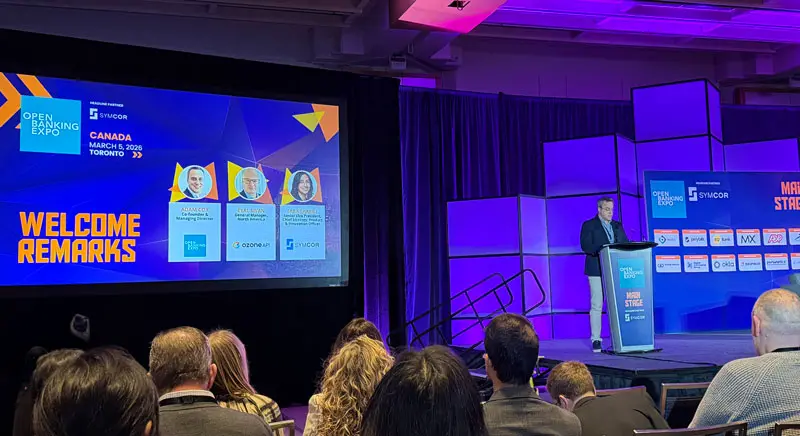
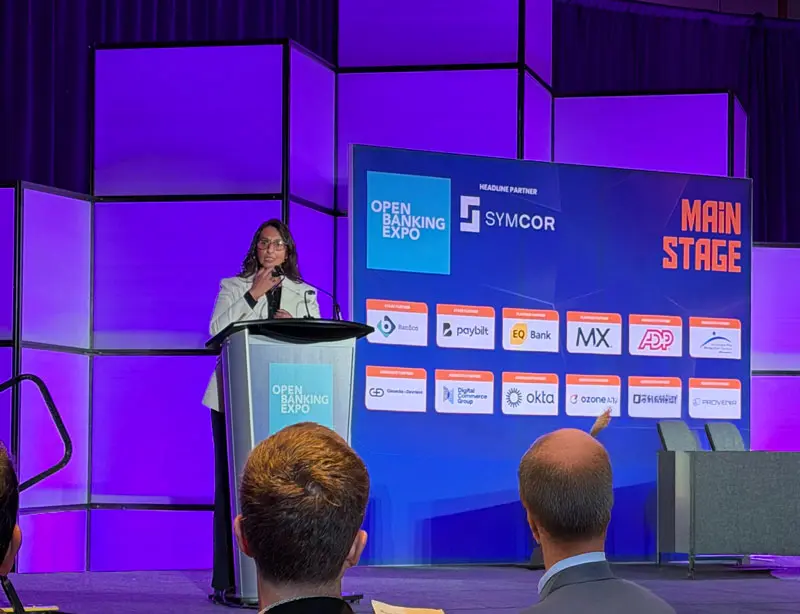
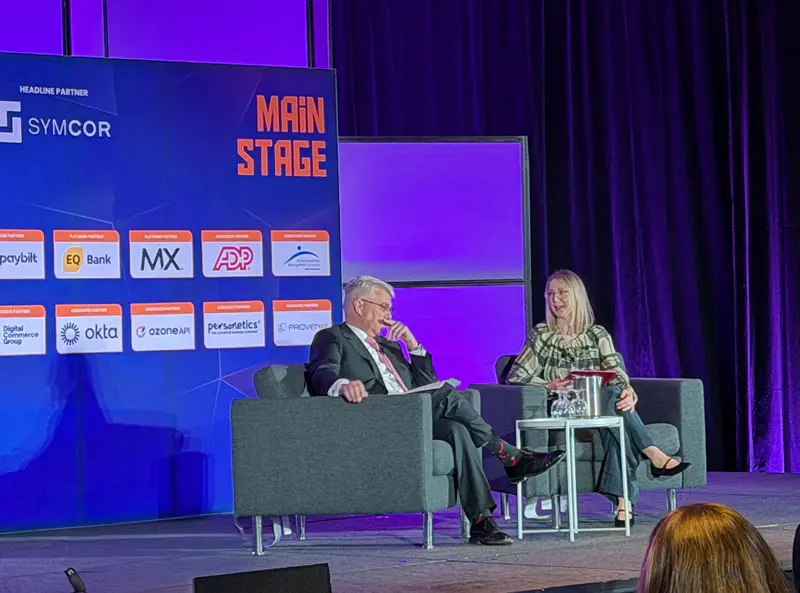
Last week, Open Banking Expo Canada brought together more than 600 regulators, banks, fintechs, and technology leaders in Toronto to discuss the next phase of Canada’s consumer-driven banking framework and how the industry will move from policy discussion to real-world implementation. The Portfolio+ team was there to listen, learn, and contribute to the conversations shaping the future of open banking in Canada.
The conversations at Open Banking Expo Canada in Toronto last week made one thing clear: the industry has crossed a critical threshold in the transition toward consumer-driven banking and the broader evolution toward open finance. For years, consumer-driven banking (often referred to as open banking) lived in consultation papers, advisory committees, and regulatory debates.
The question is no longer “if” open finance will happen. The question now is how well the industry builds the infrastructure that will ultimately support open finance.
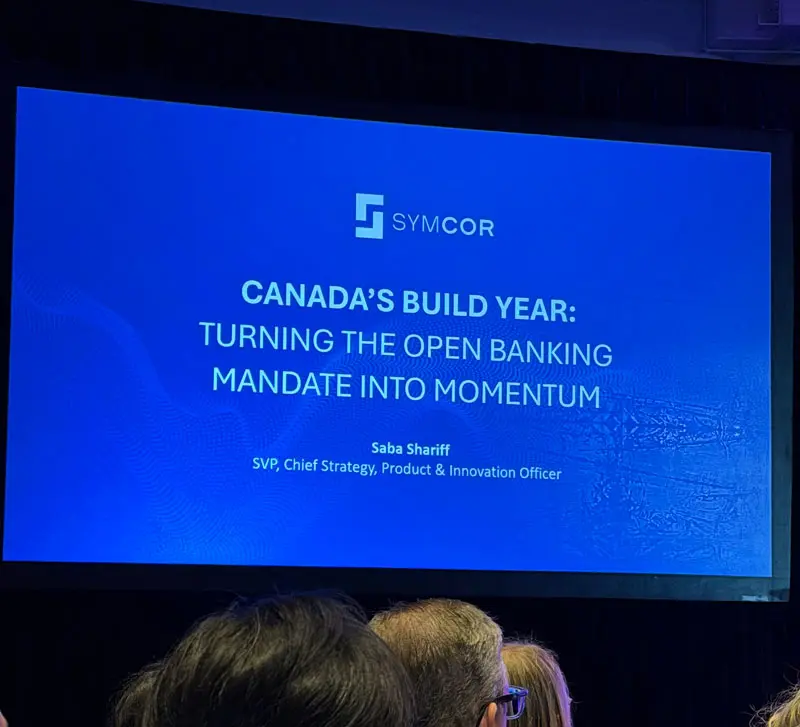
With the Consumer-Driven Banking Act now progressing and the Bank of Canada preparing to oversee the framework, the industry has entered what one speaker called “the end of the beginning.”
Now comes the hard part: delivery. And that’s where the real opportunity (and risk) lies.
The Trend: Banks are Modernizing Operations, not just Adding Digital Layers
Open Finance Won’t Succeed Because of Regulation, it will succeed because of experience
One of the most important insights from the event came from comparing global markets. Countries like the UK, Brazil, India, and Australia have already travelled this road. Their experiences offer a simple lesson:
Consumers don’t adopt open banking.
They adopt better financial experiences enabled by open finance ecosystems.
Mandates alone don’t create momentum. Better products do.
Brazil’s success, for example, wasn’t driven by regulation alone. It was driven by instant payments (Pix) combined with open finance, enabling new real-time experiences such as sending money through messaging apps.

Several speakers also highlighted that consumer-driven banking is only the first step toward a broader open finance ecosystem. While the initial framework focuses on banking data, the long-term vision extends to a wider financial data economy that may include investments, lending, insurance, and other financial services. In this sense, consumer-driven banking becomes the foundation upon which open finance is built.
When data, payments, and identity move together, innovation accelerates. When they don’t, adoption stalls. That lesson matters for Canada.
Canada’s Advantage: Trust.
Canada may be entering open banking later than many markets, but it has one powerful advantage: Trust. Several speakers emphasized that trust isn’t a feature layered on top of open banking. It’s infrastructure.
Markets that succeed build trust directly into identity, consent, authentication, and fraud prevention from day one. Without it, adoption slows. With it, financial innovation scales.
For Canada, that means building:
- Clear consent frameworks
- Strong authentication standards
- Shared fraud intelligence
- Consistent consumer protections
In other words, trust must be invisible, but undeniable.
THE REAL SHIFT: FROM DATA ACCESS TO OPEN FINANCE EXPERIENCES
One misconception about open banking is that it’s primarily about data sharing. But the Expo conversations made it clear that the real transformation happens when data turns into action.
Three use cases stood out repeatedly during the sessions:
- CASH-FLOW DRIVEN LENDING
Small businesses often face slow, document-heavy credit processes. Open banking changes that by enabling lenders to analyze real-time cash flow instead of static financial statements, improving both decision speed and risk accuracy.
Open Banking Expo-Sessions tran…
This shift could dramatically improve access to credit for Canadian SMEs.
- PAYEE VERIFICATION AND SHARED FRAUD DEFENSE
As payments become faster, fraud becomes faster too. Open banking allows institutions to verify payment recipients across banks before money is sent, reducing scams and improving confidence in digital payments.
This is particularly important as Canada prepares for real-time payment rails.
- AUTOMATED REAL-TIME ACCOUNTING
Small business owners still spend hours manually reconciling invoices and payments. Open banking enables direct connections between banking systems and accounting platforms, allowing financial records to update automatically as transactions occur.
For entrepreneurs, that means less administration and more time focused on growth.
Why Payments Infrastructure Will Determine Success
Another theme repeated across multiple sessions was the intersection between consumer-driven banking, open finance, real-time payments, and emerging payment rails. Open banking may enable payment initiation, but the experience ultimately depends on the infrastructure underneath.
As one panelist explained, open banking handles the initiation layer, while the payment rails determine how quickly money actually moves. If settlement still takes days, the experience breaks. If payments happen instantly, new use cases emerge.
This is where the broader modernization of Canada’s payments ecosystem, real-time rails, tokenized payments, and emerging stablecoin frameworks, becomes critical.
The Next Phase Requires Collaboration
One of the strongest messages throughout the Expo was that no single player will build open banking alone.
Banks, fintechs, technology providers, regulators, and infrastructure partners all have a role to play. Industry leaders repeatedly emphasized three principles:
- Collaboration
- Consultation
- Communication
Without them, implementation slows. With them, innovation accelerates. This collaborative model is also where the most exciting opportunities emerge, particularly in partnerships between financial institutions and technology providers.
What This Means for the Future of Financial Services
Open banking is not simply a regulatory project. It’s the foundation for a more connected financial ecosystem.
When consumer-authorized data, faster payments, and intelligent financial infrastructure come together, the result is a new generation of financial experiences:
- Embedded finance
- Real-time credit decisions
- smarter fraud detection
- personalized financial services
- seamless payment journeys
The infrastructure decisions Canada makes now will shape financial services for the next decade.
Where Portfolio+ Fits In
At Portfolio+, we view consumer-driven banking and the transition toward open finance not as a compliance requirement, but as a platform opportunity. The future of financial services depends on infrastructure that can support:
- real-time payments
- secure transaction processing
- fraud mitigation
- scalable financial ecosystems
These capabilities form the backbone of consumer-driven banking. As open banking evolves in Canada, the institutions that succeed will be those that focus not just on compliance, but on delivering better financial experiences built on strong infrastructure.
Because in the end, the success of open banking will not be measured by legislation. It will be measured by the moments when financial services simply work better for people and businesses. And those moments are built on the systems behind the scenes.
Comments are closed.


